Posts tagged Lebanese recipe
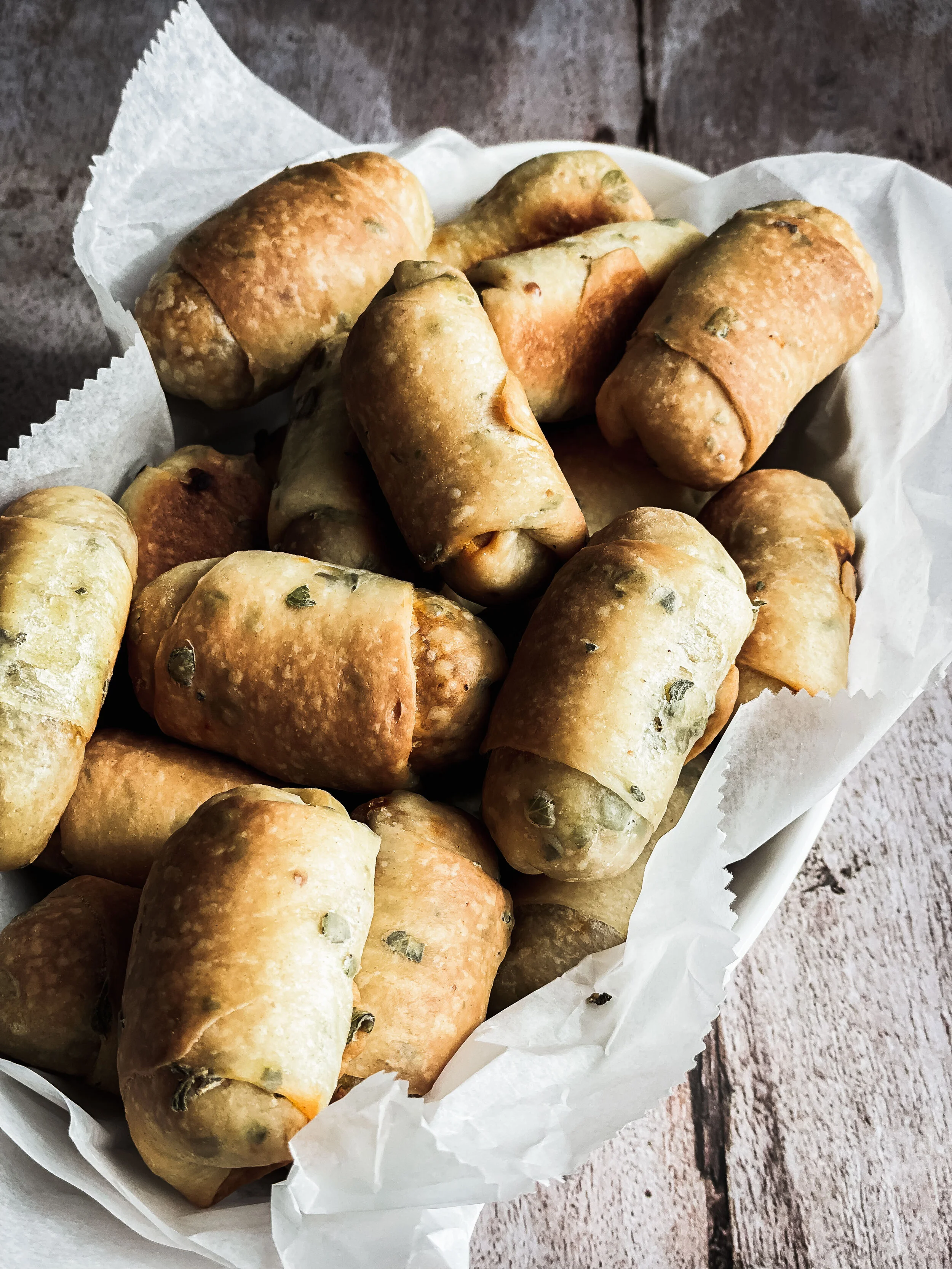
Olive Za'atar Rolls

Jump to Recipe

Today I’m sharing Olive Za’atar Rolls.

Olive Za’atar Rolls

Forget about every other Arabic savory pastry. Seriously. The deliciously tangy filling of minced olives, crushed walnuts, Aleppo pepper paste, and lemon juice is so addicting, it deserves its own merit. The dough, however, is so fluffy, silky, and adoringly studded with zesty za’atar (oregano) leaves. Honestly, the combination is not like anything you’ve had before.

My mom started coming up with this recipe about 20 years ago, and I’ve seen it unfold over time, first starting off with a ready-mixed olive salad, and then transforming into what it is today: dangerous and to-die-for. I can pop 5 in my mouth before I even blink.

Olive Za’atar Rolls

Most people have the same mo3ajanat (savory pastry) dough recipe and just swap out fillings. My mom, however, being the ambitious perfectionist she is, has paired a different dough recipe for each variety. You measure 4 c flour, 3/4 c olive oil, some salt, yeast, a bit of sugar, and some fresh za’atar leaves in a stand mixer. You then slowly add 1.5 c of warmed milk, which gives it an almost creamy quality. The za’atar leaves can be subbed with fresh oregano or left out completely, depending on availability. To make it dairy free, use your favorite milk alternative or water.

Olive Za’atar Rolls

In order to shape these, you will roll out your dough into an 8 in x 6 in wide rectangle. You will divide that rectangle into 3 sections, cutting into the right and left edges, making 8 in x 2 in or so rectangles. From each rectangle, you’ll cut on an angle, making about 8-10 triangles. Then roll out each triangle until it’s thin, place a spoon of filling, and fold the dough over it and roll it up. It sounds complicated, but I promise, once you do a few, you’ll get the hang of it. I hope the video of my mom rolling some will help!

Let’s do a quick run down of the ingredients:

Olives
Any variety of jarred pitted olives will work. We use a mixture of green, kalamata, and pepper-stuffed green varieties. They’ll be strained, chopped in the food processor, then squeezed dry.

Aleppo/Turkish Pepper Paste
One of my favorite ingredients. It’s the foundation of muhammara, and it’s also super tasty for chicken marinades and seasoning eggplant or cauliflower. Aleppo peppers are a fruity and mildly spicy red pepper grown in the north of Syria. Since the brutal civil war started, it has grown much more difficult to access the original pepper. Some farmers moved their seeds across the border into the south of Turkey. The Turks also grow their own. The peppers are dried out in the sun, ground up into a paste and preserved with salt. Both Turkish and Aleppo have slight variations, but they can pretty much be used interchangeably, depending on what you find. I find the Aleppo variety a bit punchier. In the UAE I get Aleppo Pepper Paste from Bait al Moona al Halabi in Sharjah (Google location here) or Al Douri Signature. In the US, you can find some at your local Middle Eastern grocer or on Amazon here.

Walnuts
They provide a wonderful nutty flavor and crunch to the stuffing.

Lemon Juice
Lemon juice is such a necessary ingredient in mo3ajanat filling. It really balances out the flavors with the perfect acidic punch.

Lemon Olive Oil
Lemon-infused olive oil will be your new go-to secret ingredient. It complements the lemon juice beautifully. It’s also excellent in salad dressings, and just about everywhere else you use olive oil. If you don’t want to purchase another pantry item, replace with zest from 1 lemon and olive oil. I use Brightland (but really, how can you resist with those pretty bottles).

Za’atar
I’m not talking about the ever popular spice blend, but actual za’atar leaves, which most closely resemble marjoram or oregano, and gives a really zippy quality to the dough. It grows wild throughout the Levant, and it might not be available everywhere, especially in the US. When I find it, I dry mine out in the oven and store them in a freezer bag so I can keep them around all the time. Feel free to leave it out. These will still turn out absolutely delicious.

I hope you give this recipe a try! If you do, don’t forget to put it in the comments to let everyone know how it turns out. I also love to see your creations! You can tag @omayah.atassi and #omayahcooks on Instagram.

Olive Za'atar Rolls

Olive Za'atar Rolls

Yield
About 30-35 pieces

Ingredients

Dough
  • 4 c all-purpose flour
  • 3/4 c olive oil
  • 1 tsp salt
  • 1.5 tsp instant yeast
  • 1/4 tsp sugar
  • 2 tbsp fresh za'atar leaves, marjoram, or oregano (optional)
  • 1.5 c full fat milk
Filling
  • 750 g/1.5 lb assorted jarred olives (kalamata, green, stuffed, etc.)
  • 2 c finely chopped walnuts
  • 1.5 tbsp cumin
  • 3 tbsp Aleppo/Turkish pepper paste
  • 1/4 c lemon juice, plus more to taste
  • 1.5 tbsp lemon oil, or olive oil + zest from one lemon
  • 1/2 tbsp garlic powder
  • 1/2 tbsp dried oregano

Instructions

Dough
  1. Combine all the ingredients except for the milk in a stand mixer fitted with a dough hook attachment.
  2. Warm the milk in the microwave until warm to the touch, slightly more than body temperature.
  3. With the mixer running on medium-low, gradually add the milk until fully incorporated. Mix for another 2-3 minutes until it starts to come together.
  4. Dump out the dough onto a floured surface. I like to roll it into a ball by gliding my pinky fingers underneath, sliding the ball towards me as I turn it 45 degrees to allow it to get a smooth film on top. If that sounds complicated, don't worry, just form it into a ball any which way and place back in the bowl.
  5. Cover with plastic wrap and allow to rise for about 2 hours or until doubled in size.
Filling
  1. Finely chop the olives in a food processor in batches
  2. Combine all of the ingredients in a large bowl and adjust seasoning. Set aside until ready to use.
Forming the Pastries
  1. Preheat oven to 350°F/180° C and place the rack in the middle of the oven. Divide the dough into 2 even pieces. Roll out each piece into an 8 in x 6 in wide rectangle. 
  2. Divide the rectangle into 3 sections, cutting into the right and left edges, making 8 in x 2 in or so rectangles.
  3. On the bottom left corner of one rectangle, cut at about a 45° angle, forming a triangle. From the top right corner of that triangle, cut another line going down at another 45° angle. Continue across the rectangle to form even triangles. Repeat with other rectangles.
  4. Roll out each triangle until it's about 1/8 in thin.
  5. Position the longest edge near you. Place a large spoon of filling along that edge. Fold two corners on top of the filling. Roll the edge up over the filling and keep going until you form a roll. Place on silpat or parchment-lined baking sheet, seam side down, and repeat.
  6. Bake for about 25 minutes, or until golden-brown. Allow to cool.
  7. It's hard to get the exact filling to dough ratio right. Leftover filling or dough can be frozen for months in a zip top bag.
Farooj Mehshi (Stuffed Cornish Hens)

Jump to Recipe

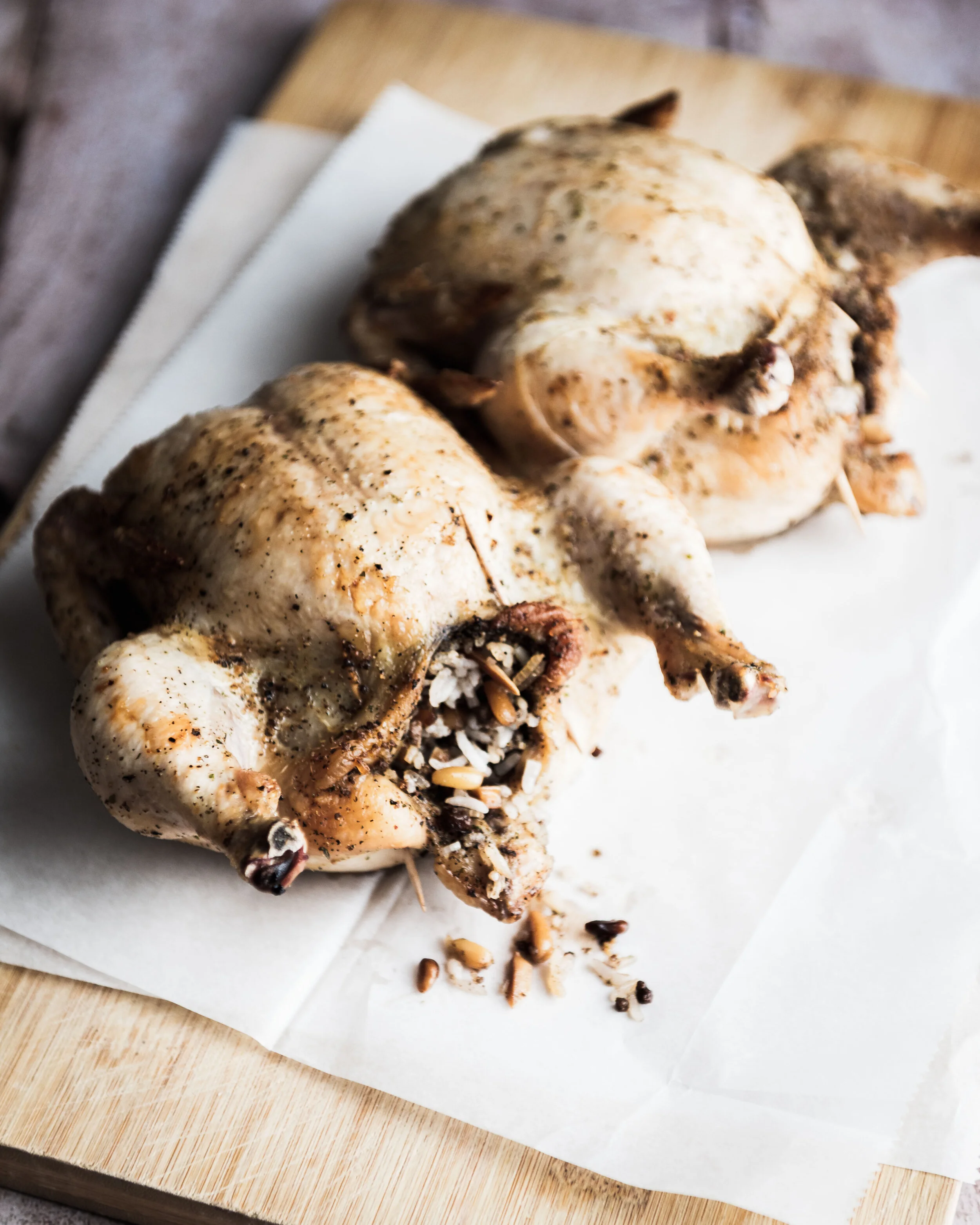
Today I’m sharing Farooj Mehshi, or Stuffed Cornish Hens.

Farooj Mehshi (Stuffed Cornish Hens)

When I was a kid and Thanksgiving rolled around, I was always confused when my American peers talked about their stuffing. Bread? Celery? Carrots? Our turkeys were always filled with a fragrant and warming blend of spiced rice, ground beef, and chestnuts called ruz muttabal, or mixed rice. Creating the ultimate fusion with an American tradition, my parents, aunts, and uncles used a traditional Syrian poultry stuffing for their gigantic holiday birds. Even though we have since made way for more American accompaniments (hello mac ‘n cheese and sweet potatoes), mixed rice still graces us every year, but now usually alongside the turkey.

Farooj Mehshi (Stuffed Cornish Hens)

More recently, I saw my mom using ruz muttabal inside Cornish hens for a decadent meal. The trick to making this on a weeknight? Prepare the stuffing a day or two ahead of time. Cook ground beef until it’s fully brown and crumbly and season it with Arabic 7 spices and salt. Add cinnamon and a chicken bouillon cube while sautéing then boiling the rice before adding in your toasted nuts. Chestnuts can be swapped for slivered almonds and pine nuts, depending on preference and availability.

Farooj Mehshi (Stuffed Cornish Hens)

I much prefer Cornish hens for this recipe, since they’re much more compact and retain juiciness, but you can use whole chicken as well. They’re covered in seasoning before stuffing, closing off with toothpicks, and then drizzling with olive oil before going into a 400°F oven for about an hour.

Here is another make-ahead tip for you: season and fill the hens the day before. The night you’re serving, all you have to do is bring it up to room temperature and slide it into the oven. It’s such an easy yet impressive meal to treat your family or dinner guests.

Farooj Mehshi (Stuffed Cornish Hens)

I hope you give this recipe a try! If you do, don’t forget to leave it in the comments to let everyone know how it turns out. I also love to see your creations! Go ahead and tag me on Instagram at #omayahcooks and @omayah.atassi.

Farooj Mehshi (Stuffed Cornish Hens)

Farooj Mehshi (Stuffed Cornish Hens)

Yield
4-6

Ingredients

Ruz Muttabal (Mixed Rice Stuffing)
  • 1 lb ground beef
  • 3 tsp salt, divided
  • 1/4 tsp black pepper
  • 2 tsp Arabic 7 spices
  • 1/4 c jarred chestnuts or pine nuts and slivered almonds
  • 2 c medium grain rice (i.e. Calrose, Egyptian, Jasmine, etc.)
  • 1/4 c vegetable or sunflower oil
  • 1/2 tsp ground cinnamon
  • 1 chicken bouillon cube
Cornish Hens
  • 4 Cornish hens or 2 small chickens
  • 2 tsp garlic powder
  • 2 tsp onion powder
  • 1-2 tsp salt
  • 1 tsp paprika
  • 1 tsp cumin
  • 1 tsp coriander
  • 1/4 c olive oil
  • 8-12 toothpicks

Instructions

Ruz Muttabal (Mixed Rice Stuffing)
  1. Place a large skillet over high heat. Cook the ground beef, breaking it up and stirring frequently, until it's fully browned, crumbly, and dry. Add 1 tsp salt, the pepper, and 7 spices.
  2. If using pine nuts and almonds, preheat the oven to 400° F/200° C. Scatter nuts onto a baking sheet and toast until golden brown, about 5-10 minutes. Set aside to cool.
  3. Place a medium-sized nonstick pot over high heat and preheat the vegetable or sunflower oil. Add the rice and stir constantly until it turns translucent, about 2-4 minutes. Add the cinnamon and chicken bouillon cube, breaking up the cube and stirring into the rice.
  4. Add 2 c of cold/room temperature water and bring up to a boil. Reduce heat to the lowest setting, cover, and cook for about 20 minutes, or until all the liquid is absorbed. Fluff and cover for an additional 10 minutes.
  5. Combine the rice and chestnuts or roasted pine nuts and slivered almonds in a large bowl. Fold in as much ground beef as you like, you might not use the whole thing. Reserve the rest in the fridge or freezer for another use (my favorite: omelettes throughout the week).
  6. Can be prepared up to 2 days ahead and kept in an airtight container in the fridge or used right away.
Cornish Hens
  1. Preheat oven to 400° F/200° C. 
  2. Combine the seasoning in a small bowl and then sprinkle and pat onto the hens.
  3. Stuff the hens with the rice mixture through the large cavity (the butt). Close them by threading 2-3 toothpicks. It's easiest to do this by grabbing the skin on either side. Reserve leftover stuffing.
  4. The stuffed hens can be refrigerated at this point for a day, or you can continue and roast on the same day.
  5. If roasting the next day, make sure they're brought up to room temperature by leaving out on the counter for about an hour.
  6. Cover with the olive oil and slide into the preheated oven, uncovered, until an instant read thermometer reads 165° F,* about an hour.
  7. Allow to rest for about 5-10 minutes before serving. Run a carving knife along the spine in order to split in half and reveal the delicious filling. Serve next to leftover mixed rice stuffing.

Notes:

*If you're cooking for someone who's Arab, you might want the thermometer to read closer to 175°F. Arabs love all meat basically falling off the bone, including poultry. Don't worry, it will still be juicy.

Created using The Recipes Generator
Kibbeh Bizeit (Kibbeh Topped with Tangy Raisins, Walnuts and Caramelized Onions)

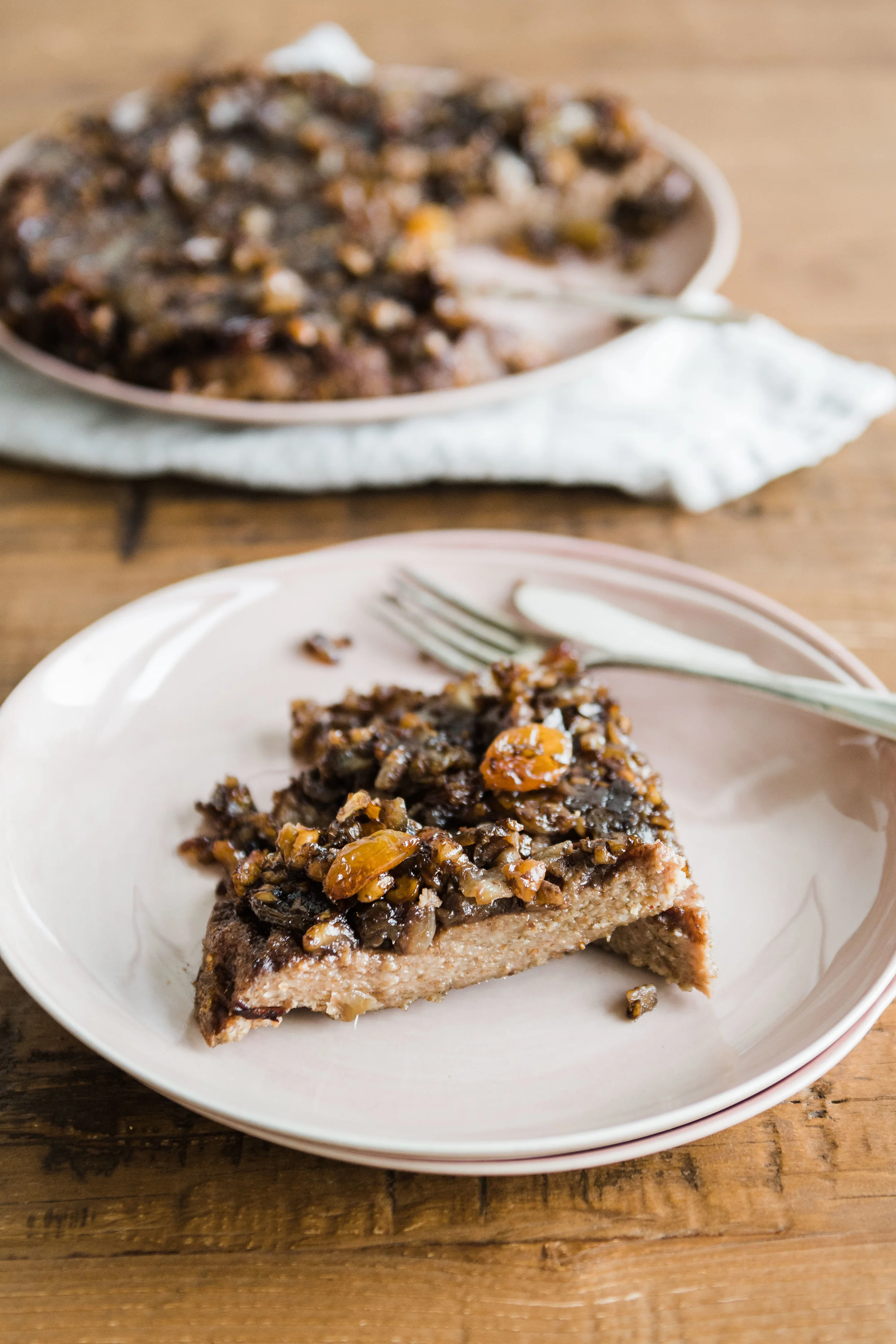
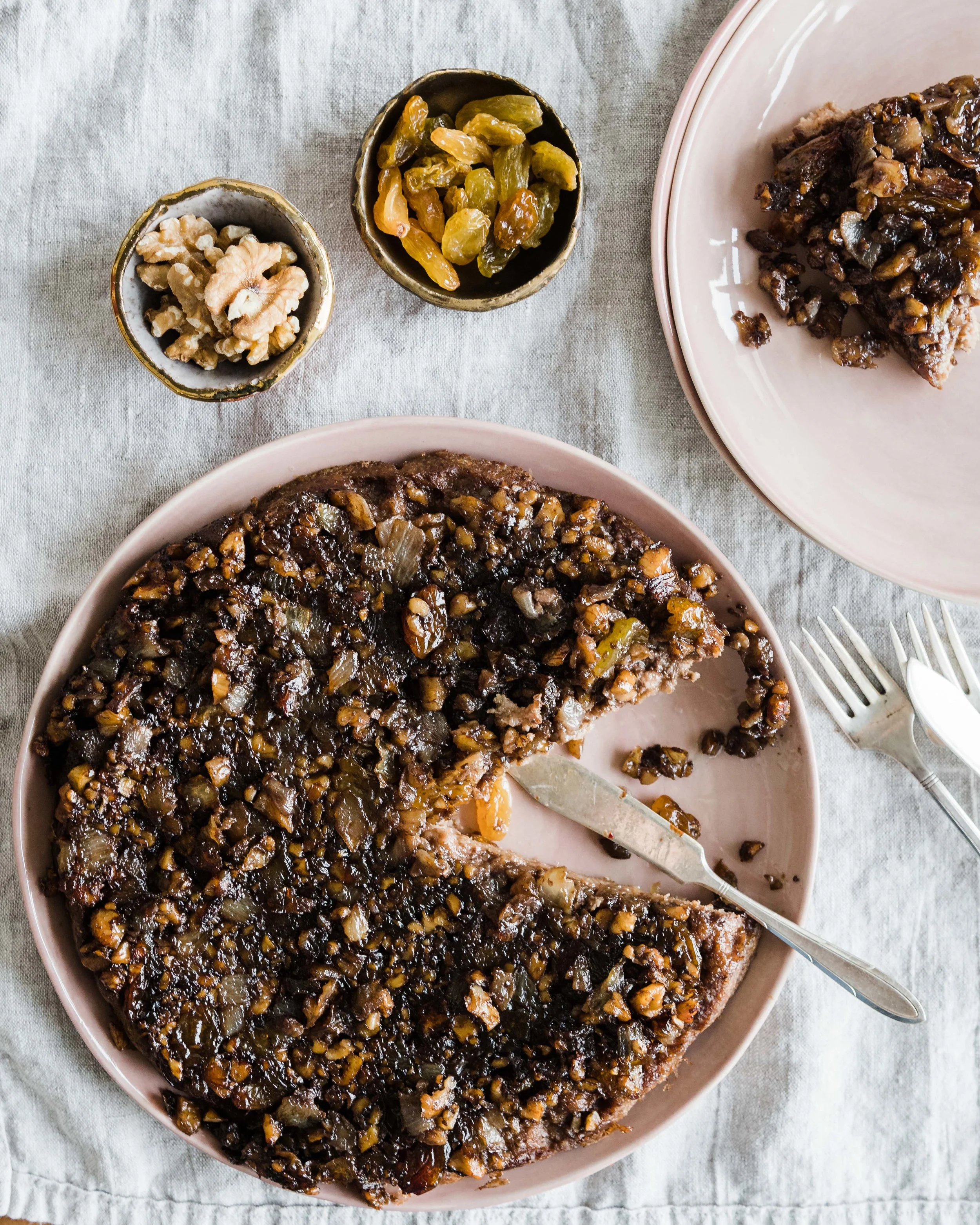
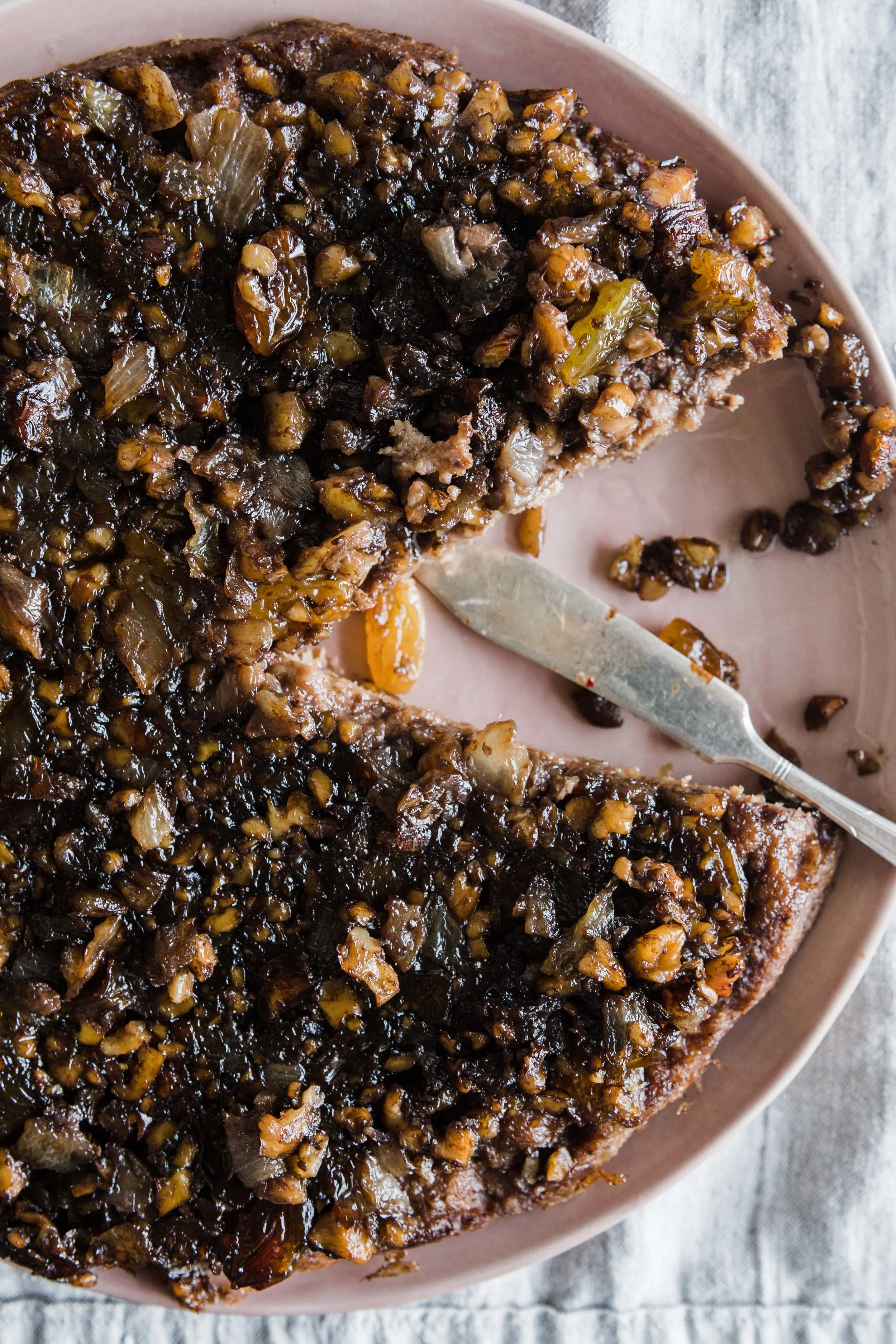
Today I’m sharing Kibbeh Bizeit, or Kibbeh Topped with Tangy Raisins, Walnuts and Caramelized Onions.

Kibbeh Bizeit (Kibbeh with Raisins, Walnuts and Caramelized Onions)

Kibbeh, which is a dough made with minced meat, bulgur wheat and onions, is a staple in just about every Syrian household. Making it is an art form, a labor of love and something that more and more people are outsourcing these days. Believe me, I completely understand why. I’ve watched my mom do it for years, and the process still intimidates me. The good news is that this kibbeh is the perfect introductory version.

Why is it a good intro kibbeh? Well, since it’s topped with the raisins, walnuts and onions, the shape isn’t super important. Also, no matter what your dough tastes like, the topping alone is so flavorful. It’s sweet, crunchy and tangy from pomegranate molasses, so it’s basically fool-proof.

Kibbeh Bizeit (Kibbeh with Raisins, Walnuts and Caramelized Onions)

Syrians have soooooo many different kinds of kibbeh. I’ve heard some people report up to 95 types, and that doesn’t include the recipes that people have come up with on their own. There’s fried kibbeh balls, kibbeh in the pan, grilled kibbeh, grilled kibbeh on skewers, kibbeh in yogurt sauce, kibbeh in quince sauce, and so much more. It’s just another way that Syrians repurpose components of dishes, and each type is so good in its own delicious way.

If you have a butcher you trust, tell him you’d like your meat trimmed from either the lamb leg or a lean part of the cow (and if he’s Middle Eastern, tell him it’s for kibbeh). You also need to tell him to cut all the fat away, literally 0% fat. There are some tricks to getting the texture of the dough right, which I specified for you below.

If you’re going to try a kibbeh recipe, this one has to be it! And that’s something I encourage you to do: just try. If you fail, you’re at least one step closer to getting it right, and you can always come back to me with questions.

Kibbeh Bizeit (Kibbeh with Raisins, Walnuts and Caramelized Onions)

I really hope to see some of your kibbeh! If you do make it, don’t forget to put it in the comments and tag @omayahatassi and #omayahcooks on Instagram!

Kibbeh Bizeit (Kibbeh Topped with Tangy Raisins, Walnuts and Onion)

Kibbeh Bizeit (Kibbeh Topped with Tangy Raisins, Walnuts and Onion)

Yield 4
Author Omayah Atassi
Syrians have all types of kibbeh recipes, and this one is fool-proof. A dough of ground meat, fine bulgur and onions is pressed in a pan and topped with tangy and sweet pomegranate molasses-dressed walnuts, raisins and caramelized onions. Eat this as a snack or with a salad to round out a meal.

Ingredients

Topping
  • 1/4 c vegetable oil
  • 1 large onion, finely chopped
  • 1 c walnuts, chopped
  • 1/2 c golden raisins
  • 1/3 c pomegranate molasses
Kibbeh
  • 1/4 c ghee
  • 1 lb habra (0% fat ground beef or lamb)
  • 2 ice cubes, plus more for ice water
  • 1 tsp baking soda
  • 2 tsp salt, plus more to taste
  • Few grinds of black pepper
  • 1 small onion, chopped
  • 3/4 lb fine bulgur, washed and squeezed dry

Instructions

  1. Heat oil in a large skillet over medium heat until shimmering. Add onions and cook, stirring frequently, until lightly caramelized, about 10-15 minutes. Remove from heat and add chopped walnuts, raisins and pomegranate molasses. Stir to combine and set aside.
  2. Preheat the oven to 350 f. Combine the habra (ground beef), baking soda, salt, pepper and 2 ice cubes in the bowl of a food processor and process until combined. Clean out the bowl.
  3. Combine the bulgur wheat, onion and 1 tsp salt in the same bowl and process until combined. Add the meat and wheat mixtures in the bowl of a stand mixer fitted with a paddle attachment. Mix on medium high until combined, about 3 minutes. Meanwhile, prepare a small bowl of ice water. Dip hands in ice water and knead the kibbeh until soft, dipping your hands in the ice water again periodically. This will take about 4-5 minutes.
  4. Spread the filling onto the bottom of a 10-inch round pan, being mindful not to scoop up the oil with it. Dip your hands in the ice water, take a handful of kibbeh, flatten between your palms until 1/4 inch thck and spread on the bottom of the prepared baking round. Repeat until the bottom is fully covered.
  5. Dip hands in ice water and smooth the layer of kibbeh, making sure it's even. Run a knife the edge to separate it from the pan. Score the kibbeh by making squares, but don't cut all the way through. This will ensure the kibbeh cooks through. Add the onion that collected from the topping (if there is any) + more vegetable oil to equal 1/4 c.
  6. Transfer tray to the oven and bake until browned, about 25-30 minutes.
  7. Cool to room temperature then flip onto a serving plate. Cut into triangles and serve.
  8. Serve at room temperature with muhammara or yogurt. Store in the fridge up to 4-5 days, in the freezer up to 3 months.
Kibbeh Bizeit (Kibbeh with Raisins, Walnuts and Caramelized Onions)
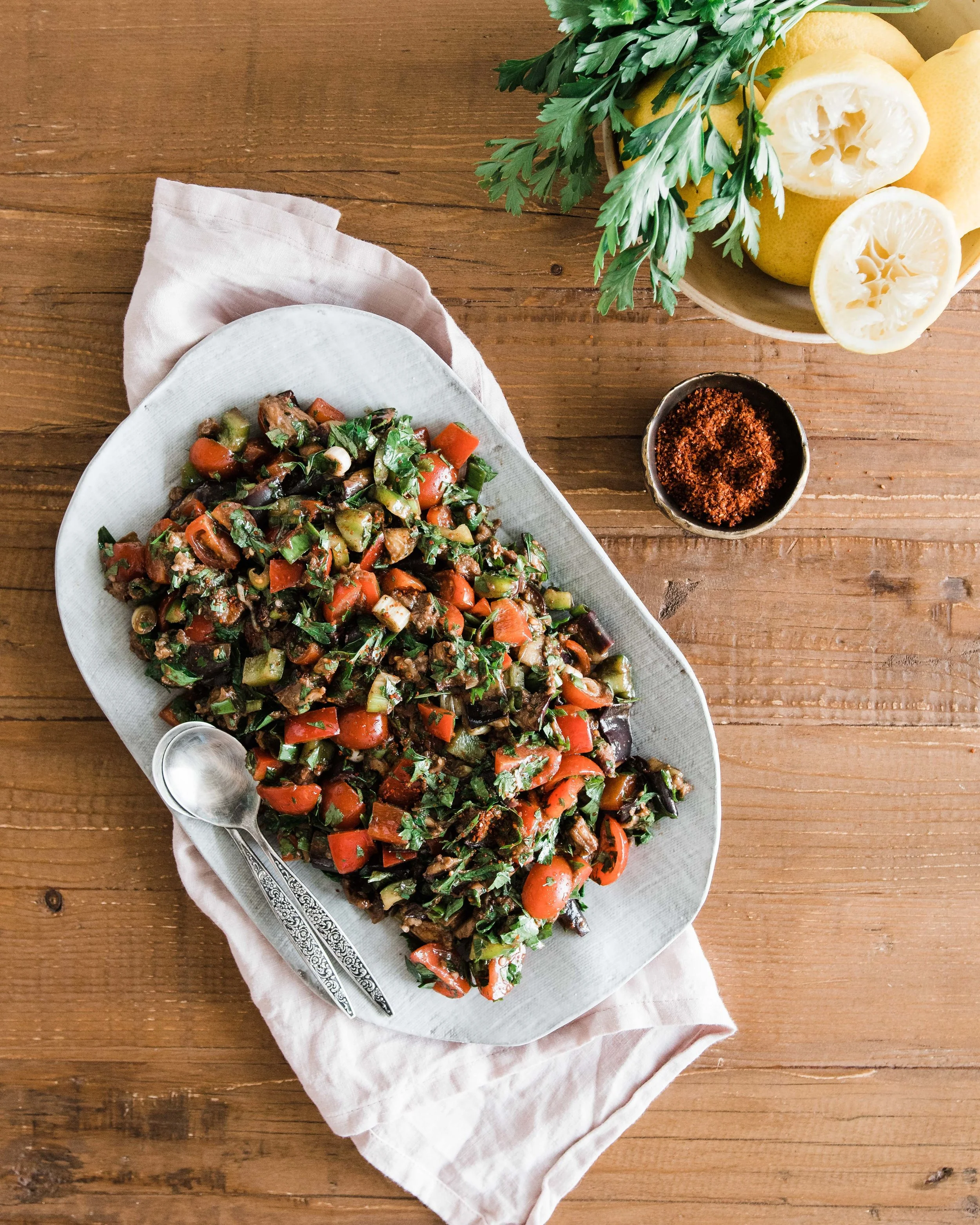
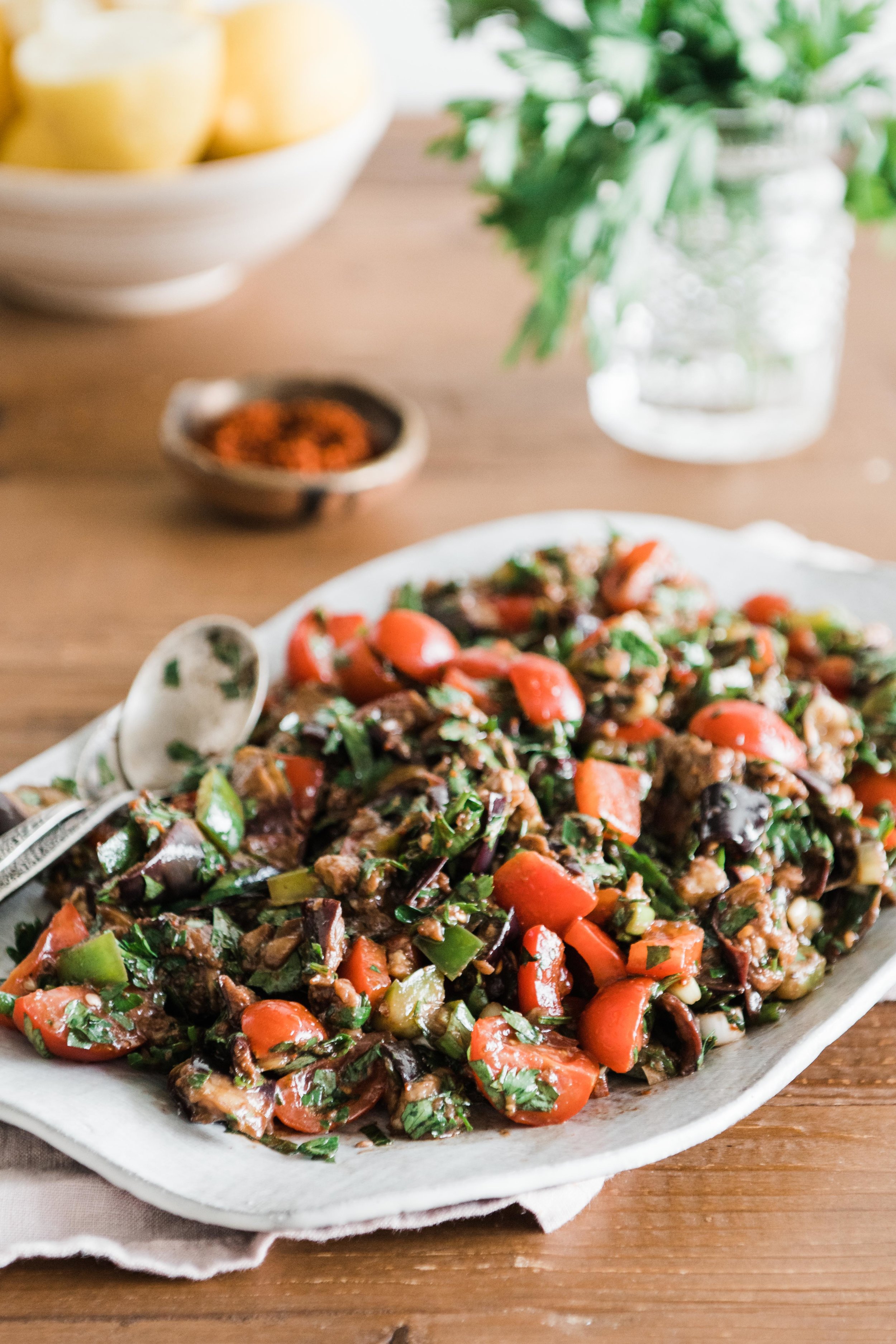
Eggplant Salad

Today I’m sharing eggplant salad.

Syrian Eggplant Salad

It’s summer in Dubai, which means the last thing I want to do is turn on the oven. With a temperature feel of 110° F, the thought of adding anymore heat into the air feels like something only a mad person would do. Cue: an endless amount of salads.

Syrian Eggplant Salad

This eggplant salad is far from your average, boring salad. You start by frying the eggplant, giving it silky, creamy texture, and making this side dish just a bit more indulgent. You then combine it with scallions, parsley, tomatoes and bell peppers, using up all that delicious summer produce. It’s dressed with zesty lemon juice and pomegranate molasses, earthy cumin and fruity Aleppo pepper.

If you’re in a part of the world where it’s grill season, this holds up deliciously next to a plate of grilled meat. If you’re in a place (like me) where you won’t be spending anymore time outside than you have to, serve this next to a leafy salad and some grains, and you have yourself a cold, refreshing, well-rounded meal.

Syrian Eggplant Salad

Like most Middle Eastern dishes, the seasoning measurements are up to your personal preference. I included the quantity I used, but your ratios may vary based on your palate, acidity of pomegranate molasses, freshness of spices, etc. Start with a smaller amount and add more as you see fit.

I hope you give this a try! If you do, don’t forget to put it in the comments and tag @omayahatassi and #omayahcooks on Instagram. I love to see your creations!

Syrian Eggplant Salad
Eggplant Salad

Eggplant Salad

Yield 6
Author Omayah Atassi
This beautiful dish of summer produce holds up nicely to grilled meat, or pair it with a leafy salad and grains to make a nice, balanced and refreshing vegetarian meal.

Ingredients

  • 1 kg (2 lbs) small eggplants, cut into 1-inch cubes
  • 15-20 cherry tomatoes, halved or quartered
  • 2 mixed bell peppers, cut into 1-inch pieces
  • 2 scallions, chopped
  • 1 garlic clove, smashed
  • 1 c chopped parsley (about 1-2 bunches)
  • 1.5 tsp Aleppo pepper
  • 1 tsp cumin
  • 1 tsp kosher salt, plus more to taste
  • Juice from 1 lemon
  • 5 Tbsp pomegranate molasses (or to taste)
  • 2 c vegetable oil

Instructions

  1. Pour enough vegetable oil in a stockpot to cover the bottom by 1.5 inches, about 2 cups, but may be more. Heat until it reaches 375° F, or until a piece of bread is dropped in and begins frying immediately. Fry the eggplant in batches until golden, about 2-4 minutes, transferring to a colander set over a bowl. Drain and allow to cool.
  2. Transfer the eggplant to a large bowl. Add the vegetables and half of the seasoning, lemon juice and pomegranate molasses. Toss gently with two spoons, being mindful to retain the eggplant's shape. Taste and add more seasoning as necessary.
  3. Can be prepared up to 6 hours ahead and placed in the fridge. Allow to come to room temperature before serving.
Syrian Eggplant Salad
Ramadan Project: Syrian Fattet Makdous vs. Palestinian Fattet Makdous

It’s the second dish of me and Dima’s Ramadan project! Baby eggplants which are stuffed and fried are smothered in a sauce of garlicky yogurt and tomatoes- fattet makdous is what dreams are made of. If you missed week one, you can catch it here.

Fattet Makdous, Eggplant Fatteh

There’s no Ramadan table complete without fatteh. Fatteh means crushed or crumbed, and in this case, it’s referring to crushed fried pita bread. There are all sorts of variations on fatteh, and the most common during Ramadan is hummus fatteh. For our Ramadan project, we chose the baby eggplant version because a) it’s delicious and b) we wanted to highlight one significant difference between our eating cultures: the use of tahini.

Fattet Makdous, Eggplant Fatteh

Dima’s fattet makdous uses a sauce of mostly tahini with a little bit of yogurt. She explained to me that in her region in Palestine, the use of tahini is very important, and they use loads of it. We, on the other hand, only use a couple spoonfuls of tahini, and we use lots of labneh (strained yogurt) for our sauce. Dima also mixes parsley into her sauce, while I just topped my dish with parsley.

The other components were essentially the same: meat, onion and pine nut stuffed baby eggplants which are deep fried, tangy tomato sauce and extra topped pine nuts and parsley. Dima usually uses fried pita croutons, but she forgot them on this day, so she used toast. She usually uses the pita chips, so I’m not considering this a difference with the recipe 😋.

Fattet Makdous, Eggplant Fatteh

Both dishes were absolutely delicious in their own unique way. I encourage you to give both a try! You can catch my recipe here and Dima’s post here. Do you have experiences with fattet makdous? We’d love to hear! Tag #RamadanSpecial2019 to participate, and we’ll share our favorites! Happy eating!