
Sourdough Cheese Fatayer (Cheese Pies)
These sourdough fatayer bi jibn are pillowy, chewy, savory, and just a little tangy. They're one of my favorite things to make when I need to stock the freezer with snacks or something easy to serve alongside a meal. I made them for a dinner party recently, and they were the first things to disappear.
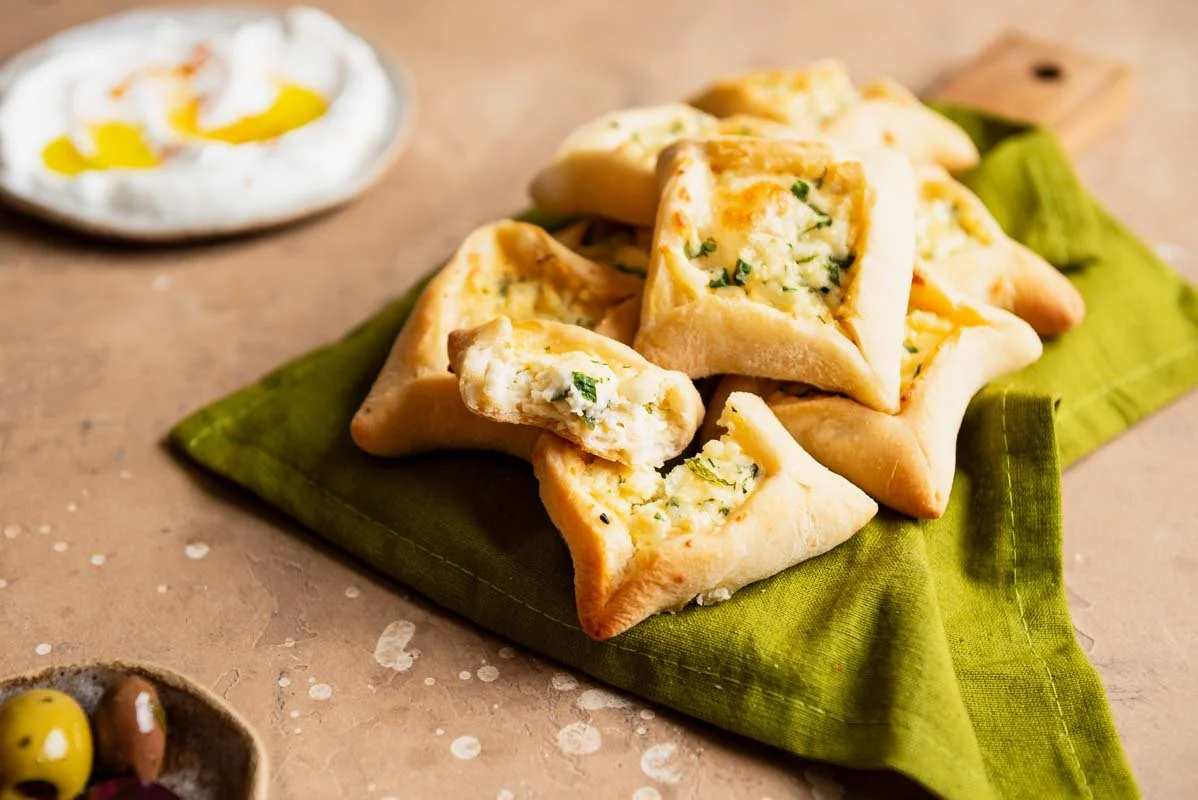
My sister-in-law gifted me a sourdough starter last summer, and I was off to the races. If you have a sourdough enthusiast in your life, you probably know how this goes. I started turning just about every baked good into a sourdough version. Naturally, I decided to adapt my aunt's fatayer bi jibn, a recipe I'd been making for years, and I haven’t looked back.
My aunt runs a catering business in Homs, Syria, and is known for her soft, tender fatayer. Baking has long been part of everyday life in Syria, though not necessarily in the home kitchen. Traditionally, families would take their fillings to the neighborhood farran, or baker, who had the oven and dough to turn them into fatayer. Naturally leavened breads have an even longer history in the region, predating commercial yeast by centuries. So while my sourdough fatayer are a modern adaptation of my aunt's recipe, the method of leavening is anything but new.
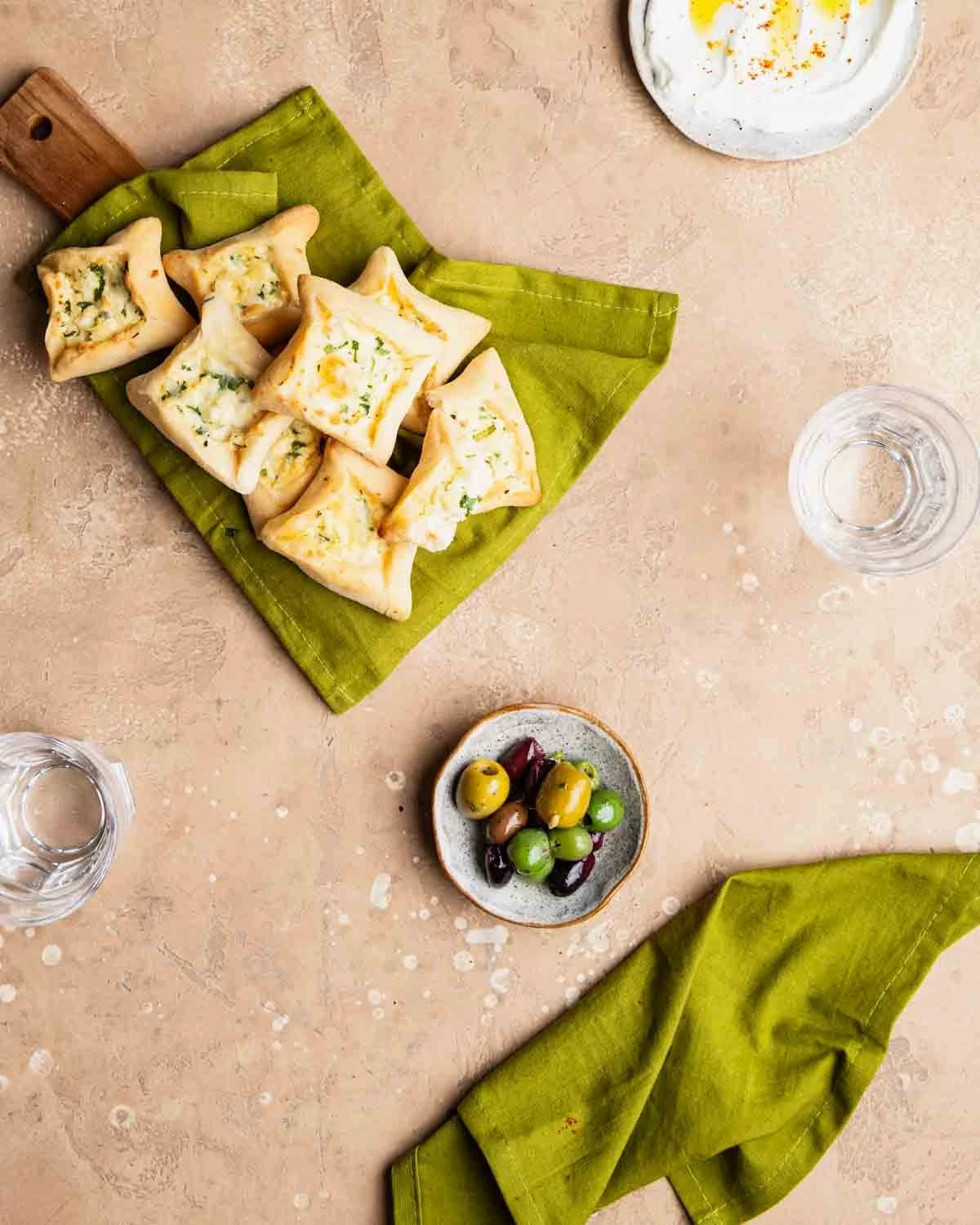
In my kitchen, I serve these whenever a meal needs a little something extra: alongside soups and salads, as part of a mezze spread with kibbeh and other fatayer, or packed into my kids' lunchboxes. I almost always make enough to freeze, because having a stash of homemade fatayer on hand makes life a little easier.
Sourdough Cheese Fatayer Ingredients
I use a combination of three cheeses in the filling, each bringing something different to the table. If you can only find one or two, that's fine too.
Sourdough starter — Build a levain the night before or use an active, bubbly starter.
Flour — Both all-purpose and bread flour work here. Bread flour will give you a slightly chewier dough.
Milk — Adds richness and helps keep the dough soft and tender.
Sugar — Adds a touch of sweetness to balance the savory filling.
Salt — I use Diamond Crystal kosher salt, but any fine salt will work. Use the weight measurements for accuracy.
Plain yogurt — Adds tenderness and a subtle tang.
Vinegar — A small addition carried over from my aunt's original dough recipe.
Akkawi cheese — A mild, melty white cheese commonly used in Middle Eastern pastries. You can find it at most Middle Eastern markets. If it's particularly salty, soak it in water before using.
Nabulsi cheese — A firm, salty cheese with a more pronounced flavor that gives the filling some character.
Mozzarella cheese — A mild, melty cheese that balances the saltier cheeses. Use full-fat, low-moisture mozzarella, preferably from a block rather than pre-shredded.
Egg — Helps bind the cheese filling together.
Nigella seeds — Add a subtle nutty, slightly peppery flavor.
Chopped parsley — Adds freshness and a little color.
How to Make Sourdough Cheese Fatayer
Like most sourdough recipes, these fatayer take some time to make, which is why I like to prepare a big batch and freeze the extras.
Build the levain. If you're building a levain, mix it at about a 1:5:5 ratio (starter:flour) about 6-12 hours before making the dough. Timing will vary depending on temperature and starter activity. Use the levain when it's bubbly, well-risen, and at or near its peak. Alternatively, use an active sourdough starter.
Mix the dough. Fit a stand mixer with the dough hook attachment. Warm the milk to 74–78°F (23–26°C). In the mixer bowl, combine the flour, levain, milk (reserving 15–20 g), yogurt, sugar, and vinegar. Mix on low speed for 2–3 minutes, until no dry flour remains. Cover and rest for 20 minutes.
Add the salt. Mix on low speed for about 1 minute, until fully incorporated.
Incorporate the oil. With the mixer running on low, drizzle in the oil very slowly, allowing each addition to incorporate before adding more. The dough may initially look slippery or separated, but it will come back together as you mix.
Develop the dough. Increase the speed to medium and mix for 5–7 minutes, until the dough is smooth, soft, slightly tacky, and has developed strength. If it feels too firm, gradually add the reserved milk. If it's already soft and pliable, leave the extra milk out to avoid making the dough too sticky. Aim for a final dough temperature of 76–78°F (24–26°C).
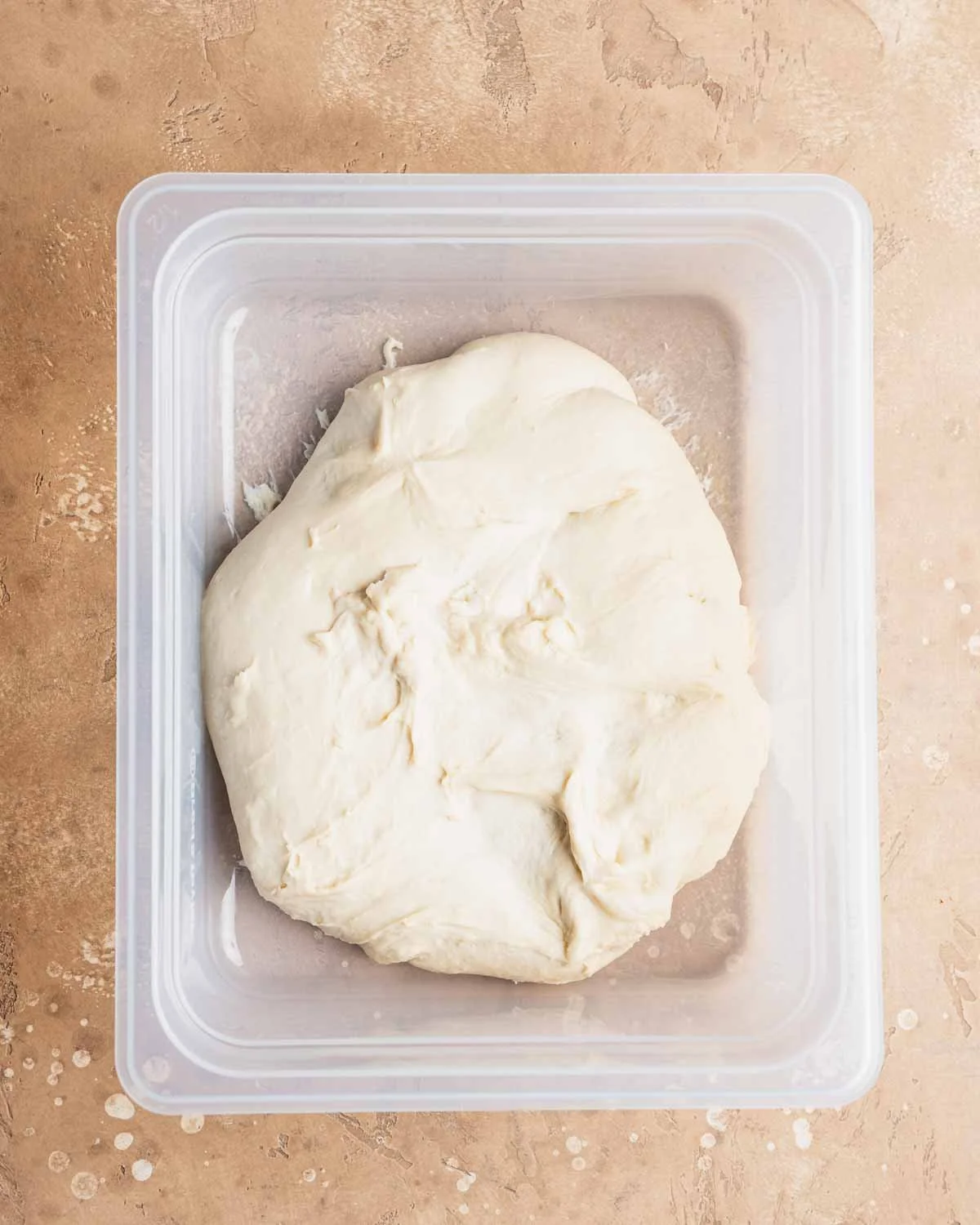
Bulk ferment. Cover the dough and let it rise for approximately 4–5 hours in a warm room (74–76°F / 23–24°C) or a proofing box. Because this is an enriched dough, don't expect it to double like a country sourdough loaf. Instead, look for a noticeable increase in volume, small air bubbles, and a dough that feels lighter and airier than when you first mixed it.
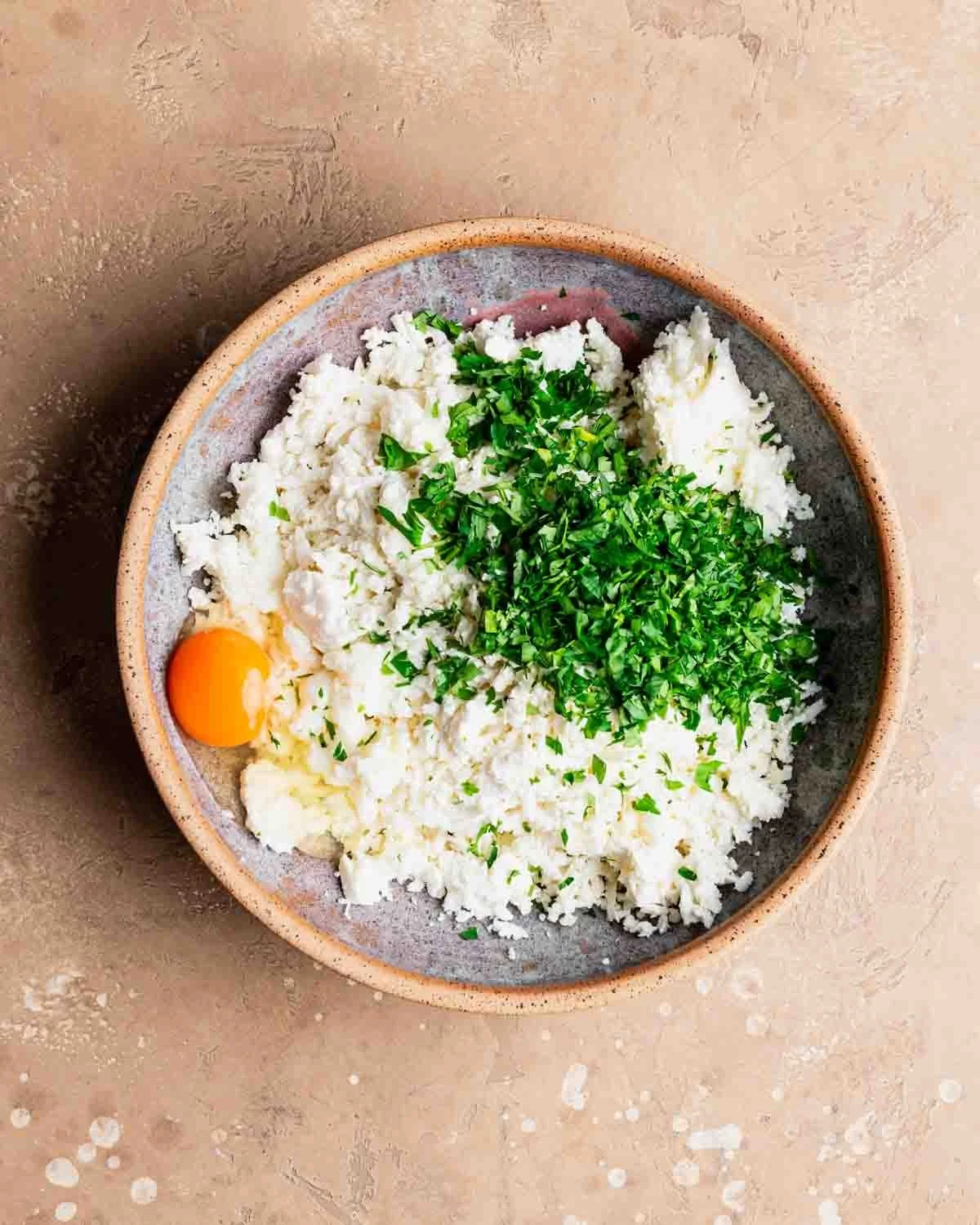
Prepare the filling. While the dough ferments, shred the three cheeses in a food processor and transfer them to a large bowl. Add the egg, nigella seeds, and chopped parsley. Mix until evenly combined.
Divide the dough. Once bulk fermentation is complete, divide the dough into 26 g portions and shape each into a smooth ball. Cover the dough balls while you work to prevent them from drying out. Line two baking sheets with parchment paper or silicone baking mats.
Fill and shape. Using a generous amount of flour, roll each dough ball into a thin circle, approximately ⅛–¼ inch (3–6 mm) thick. Place 18–19 g of cheese filling in the center. Imagine four corners around the circle. At each corner, bring two adjacent edges of dough together and pinch firmly to seal. Repeat at all four corners to create a square-shaped fatayer with a smaller square opening in the center, leaving the cheese exposed. Transfer to the prepared baking sheet and repeat with the remaining dough and filling.
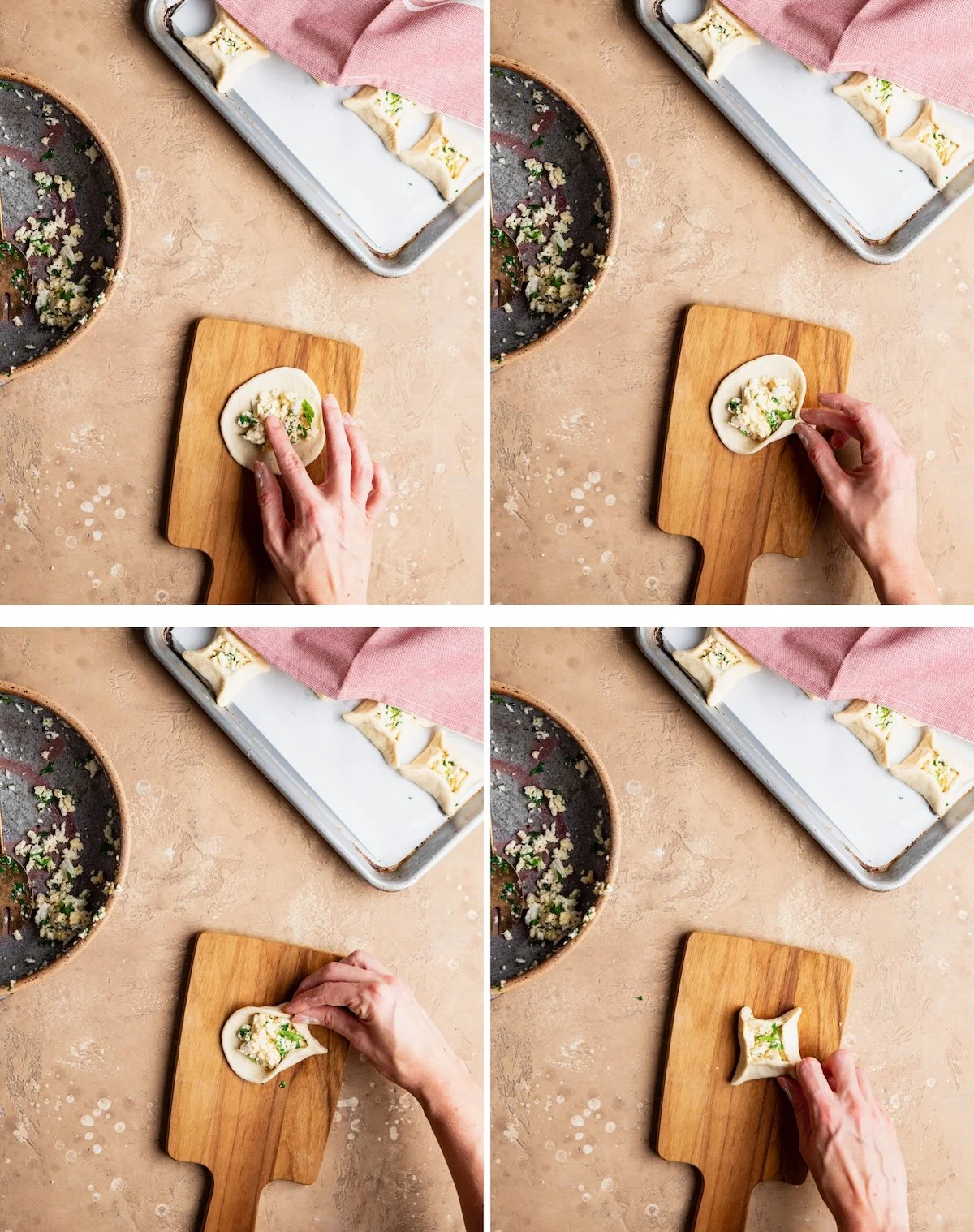
Final proof. Cover the shaped fatayer loosely and let them proof for approximately 1½–2½ hours, until visibly puffed and lighter in appearance. The dough should look soft and slightly expanded, but it doesn't need to double.
Preheat the oven. Toward the end of proofing, preheat the oven to 375°F (190°C).
Bake. Bake for approximately 12–15 minutes, until the fatayer are lightly golden brown, the bottoms are cooked through, and the cheese filling is set. Transfer to a wire rack and allow to cool slightly before serving.

How to Freeze and Reheat Cheese Fatayer
I love keeping a stash of fatayer in the freezer for quick snacks, school lunches, or an easy addition to a meal.
Once the fatayer have cooled completely, line a baking sheet with plastic wrap and arrange them in a single layer. If you need to stack them, place another sheet of plastic wrap between the layers to prevent sticking. Freeze until solid, about 2 hours, then transfer to a labeled freezer bag. For the best quality, use within 2–3 months.
To reheat, let the fatayer thaw on the counter for about 30 minutes, then warm in a 350°F (180°C) oven for 5–8 minutes, or until heated through. If thawing for longer, place them in the refrigerator instead.
You can also reheat the fatayer directly from frozen. Bake at 350°F (180°C) until warmed through, allowing a few extra minutes. This is especially convenient when you only need a few at a time.
Frequently Asked Questions
Can I use commercial yeast?
Absolutely! You won't get quite the same depth of flavor as sourdough, but the fatayer are still delicious. For a recipe made with commercial yeast (my mom’s, not my aunt’s), follow my original cheese fatayer recipe.
Can I use sourdough discard?
I recommend using an active, bubbly sourdough starter for this recipe. Discard that hasn't been recently fed may not have enough leavening power to give the fatayer their soft, pillowy texture.
Why isn't my dough rising?
Check your dough and room temperatures. If the dough starts out cooler than the target temperature, or your kitchen is cooler than 74–76°F (23–24°C)
Serve It With
These sourdough cheese fatayer are delicious on their own, but I love serving them as part of a larger meal. Here are a few of my favorite pairings:
With a fresh salad: Serve alongside Fattoush for something crunchy, herby, and bright.
As part of a mezze spread: Pair with Eggplant Mutabal, Hummus, olives, and fresh vegetables.
With other Syrian favorites: Make a spread with Spinach Fatayer and Ful Maqala.
Alongside soup: A warm bowl of lentil soup and a few cheese fatayer make an easy, satisfying lunch.

Sourdough Cheese Fatayer (Cheese Pies)
Soft, pillowy Syrian cheese pies made with sourdough starter and filled with a savory blend of three cheeses. They're slightly chewy, with just a hint of tang, and perfect for freezing.
Ingredients
- Alternatively, use 200 g active sourdough starter.
- 20 g ripe sourdough starter
- 90 g all-purpose or bread flour
- 90 g water
- 500 g all-purpose or bread flour
- 280–300 g whole milk, divided
- 200 g ripe levain
- 100 g neutral vegetable oil
- 30 g plain yogurt
- 15 g sugar
- 15 g vinegar (1 tablespoon)
- 9 g salt
- 200 g Akkawi cheese, shredded
- 200 g Nabulsi cheese, shredded
- 200 g Full-fat, low-moisture mozzarella, shredded
- 1 egg
- 2 tbsp - 1/4 c nigella seeds
- 1/2 c fresh parsley, finely chopped
Instructions
- Build the levain. If you're building a levain, combine the starter, flour, and water about 6–12 hours before making the dough, depending on your feeding ratio and room temperature. Use it when it's bubbly, well-risen, and at or near its peak. Alternatively, use 200 g active sourdough starter.
- Mix the dough. Set up a stand mixer fitted with the dough hook attachment. Warm the milk to 74–78°F (23–26°C). In the bowl of the stand mixer, combine the flour, levain, 280 g milk (reserving the remaining 20 g), yogurt, sugar, and vinegar. Mix for 2–3 minutes on low, until no dry flour remains. Cover and rest for 20 minutes.
- Add the salt. Mix on low speed for about 1 minute, until fully combined.
- Incorporate the oil. Slowly, and I mean slowly, drizzle in the oil while mixing on low. Allow each addition to incorporate before adding more.
- Develop the dough. Increase the speed to medium and mix for 5–7 minutes, until the dough builds strength and is smooth, soft, and slightly tacky. If it's not quite soft enough, add the remaining milk and mix until combined. If it's already soft and pliable, leave the milk out to avoid making the dough too sticky. The target dough temperature is 76–78°F (24–26°C).
- Bulk ferment. Cover and allow the dough to rise for approximately 4–5 hours in a warm room (74–76°F / 23–24°C) or a proofing box. Since this is an enriched dough, it won't rise as dramatically as country sourdough bread. Look for a noticeable increase in volume, small air bubbles, and a dough that feels lighter and airier. Use these cues rather than the clock alone.
- Prepare the filling. While the dough ferments, shred the three cheeses in a food processor and transfer them to a large bowl. Mix in the egg, nigella seeds, and chopped parsley until evenly combined.
- Divide the dough. When the dough is ready, divide it into 26 g portions and shape each into a smooth ball. Cover the dough balls while you work to prevent them from drying out. Prepare two baking sheets with parchment paper or silicone baking mats.
- Fill and shape. Using a generous amount of flour so the dough balls don't stick, roll each ball into a thin circle, approximately ⅛–¼ inch (3–6 mm) thick using a rolling pin. Place about 18–19 g of filling in the center. Imagine you're going to make a square by forming four corners. At each corner, bring two adjacent sides together and pinch firmly, creating a square-shaped fatayer with a smaller square opening in the middle that exposes the cheese. Place on the prepared baking sheet and continue with the remaining fatayer.
- Final proof. Cover loosely and proof for approximately 1½–2½ hours, until the fatayer have visibly puffed and feel lighter and airier. They don't need to double in size.
- Preheat the oven. Toward the end of proofing, preheat the oven to 375°F (190°C).
- Bake. Bake for 12–15 minutes, until lightly golden brown, the bottoms are cooked through, and the cheese filling is set. Transfer to a wire rack and allow to cool slightly before serving.
Notes
Sourdough starter: Use an active starter or levain at or near its peak. The levain formula above is a 1:4.5:4.5 feeding ratio. For a same-day levain build, use a 1:2:2 or 1:3:3 ratio.
Dough texture: The dough should be soft and slightly tacky. Avoid adding unnecessary flour, which can make the finished fatayer less tender.
Cheese: If your akkawi or nabulsi is particularly salty, soak it in water before using and drain thoroughly. A relatively dry filling works best.
Freezing: Allow the baked fatayer to cool completely. Freeze in a single layer on a lined baking sheet until solid, about 2 hours, then transfer to a labeled freezer bag. For best quality, use within 2–3 months.
Reheating: Thaw for approximately 30 minutes, then reheat at 350°F (180°C) for 5–8 minutes, or until warmed through. For longer thawing, refrigerate instead of leaving them on the counter.
Commercial yeast: For a yeast-based version, see my original cheese fatayer recipe.